.png)

.png)
Why didn't Haircut 100 dominate the 80s?

In 1981, Haircut 100 looked like they'd take over the whole decade. Their debut album was considered the perfect pop album. By 1982, it was effectively over.
That's the sound of the band in question: a song called Love Plus One from their album, Pelican West, released in 1981.
And at the time of release, it looked like they were poised to be the next big thing: It was only kept from the No.1 album spot by Barbra Streisand's Love Songs album.
I think that’s part of the story right there - not Barbra Streisand specifically, but the sheer calibre of pop musicians in the early 80’s. I’ll go into that more later. But first let's get an idea who haircut 100 were.
They formed in London during the New Wave/second British invasion in 1980, but it took a few years.
Nick Heyward, who handles vocals/guitar and bassist Les Nemes, had been playing music together since about 1977. They met in South London as school friends and started a series of short-lived bands with different names like Boat Party, Captain Pennyworth, and Moving England.
During these early years they were experimenting with punk, funk and post-punk sounds and honing their song writing and performance skills.
In 1980, Heyward and Nemes brought their friend Graham Jones into the fold on lead guitar, forming the core trio of what would become Haircut 100. Graham had a firm punk background but adapted to bring in funky, precise guitar lines that gave the band a bit more sparkle, which gave Nick space to focus on the structure and song writing.
It was during an early band meeting that the name Haircut 100 came about. It wasn’t exactly a eureka moment. They were tossing around ideas for a new name, and someone said haircut. Someone else said One Hundred.
So they stuck the names together, laughed at it, and decided that was the band name. Marc Fox told Classic Pop in 2025:
“Even our name: ‘Haircut’ and ‘100’? We laughed our way into the chart. Provided you didn’t fall into fits of laughter saying ‘Haircut 100’ to other people, after three times of saying it, it became reality.”
That was really part of their charm - sure, they were about as preppy and poppy as you could get, but underneath it was a cheeky sense of humour. Have a look at the video to Love Plus One, it's full of little gags and funny glances at the camera.
The band moved into a flat together, and were really living out their idealised vision of band life - they lived together, ate together, worked together. Nick Heyward told Classic Pop:
“We tried to live out the dreams of the bands we’d seen on TV and in the pictures I’d stared at for hours in magazines. We had that vision both from the start of Haircut 100, and once we got successful. I still play a Mustang bass because it’s what Tina Weymouth looked so cool playing in Talking Heads.”
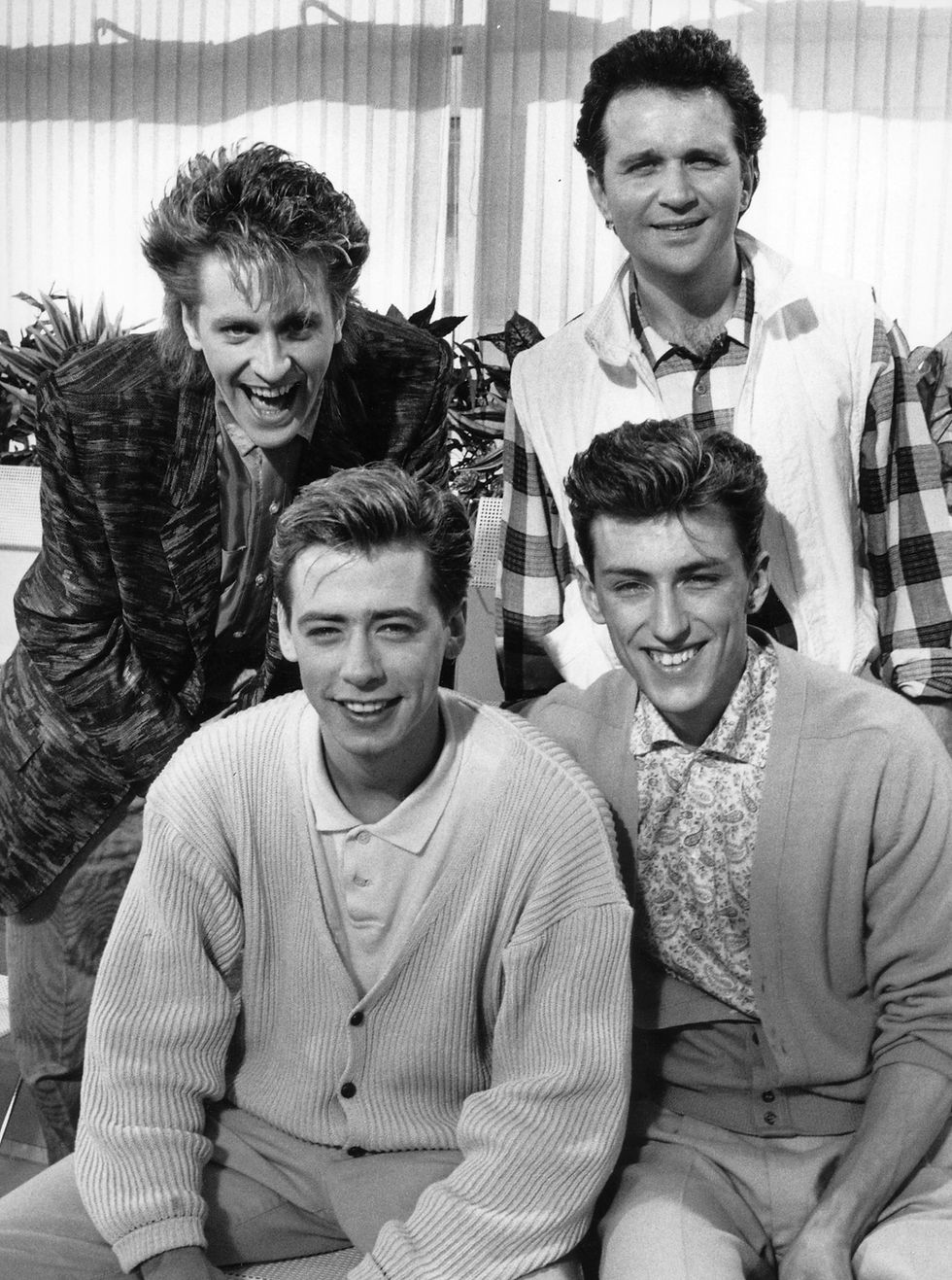
Right, that's enough on how they formed, what did they do? Well, they wrote some bloody good songs. But they were savvy too - they knew they had to make an impression at their shows. This was a golden era of pop music.
This was when Michael Jackson was doing Thriller. Madonna had just exploded with Like a Virgin. Queen was doing their thing.
And that was the big leagues. Even in the UK, in the New Wave Haircut 100 were part of, there were a ton of good bands. Eurythmics, Wham, Duran Duran, all these bands were coming up during this time and would break big in the next couple years.
Haircut 100’s solution was… marshmallows and wine. They’d give them out at shows, just because no one else was doing it… On the surface it's a funny bit, but underneath it shows marketing genius.
If you go to a show, and the singer hands you a glass of wine and some marshmallows, and then puts on a good show, you’re going to tell your friends aren’t you?
They also brought in some extra musicians to jazz up their sound, saxophonist Phil Smith and an extra percussionist, Marc Fox, who also contributed more backing vocals.
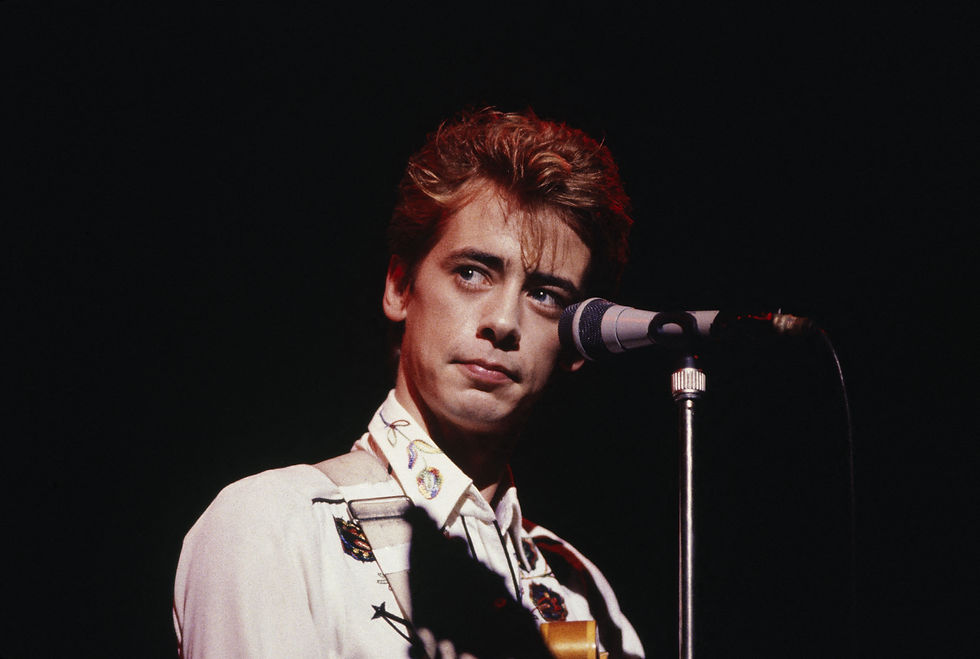
And then you had singer Nick Heyward directing their look. He worked at a design agency, so he was probably the best man for the job.
“I always carried a portfolio with me, which had pictures of us and our potential artwork. I knew not to leave the visual ideas up to other people because, if you don’t take control of your life, you can’t complain when others do it instead.”
With this recipe, it didn’t take long for them to get signed to a label and given a great producer in Bob Sargeant.
He took the raw material that was 6 talented blokes, and focused them into something polished.
Tracks like Favourite Shirt and Love Plus One came out in 1981 and immediately made a splash. They appeared on TOTP in October ‘81, which interestingly cost Marc Fox his job as a teacher.
They told him he had breached their code of conduct by signing a contract with the BBC, and that he should choose between teaching and a music career. That was probably a short meeting.
And it wasn’t long until the label asked for an album, so into the studio they went.
They were a really diverse group of musicians and drew on all sorts to make something just a little bit different at the time. Heyward was determined to put his own spin on his influences. He told Classic Pop:
“I drew from pioneers like David Bowie and Marc Bolan, going past my brother’s bedroom, hearing Ride A White Swan and thinking: ‘Why are you riding a white swan?’"
But one of things that really made this album stand out at the time was its production. It was one of the first albums ever to be completely digitally recorded, rather than on analogue tape.
What this meant is that they had complete control over the editing and mixing process.
Now don’t get me wrong, the analogue days were brilliant. The challenges producers faced in those days bred some brilliant sounds and studio techniques - I've done a few videos talking about that.
And I'm sure most of you watching will argue that the sound quality was better back then.
But what this digital recording meant was that they produced an album with great clarity - they could manipulate every sound to make sure that every beat landed strong, or that some part dropped back and returned in just the right way.
At the time, it just sounded different. And different is interesting.
Pelican West dropped in 1982, and in the UK it was a smash. As I said, it hit no.2 in the album chart, and the critics loved it.
NME gushed over it upon is release:
“Some of the most summery, stylish and extravagantly repeatable music since Countdown to Ecstasy [...] Haircut One Hundred have made the lightweight – there's no other kind – masterpiece of the decade."
And the public obviously felt the same. Haircut 100 became overnight superstars. It was Beatlemania, 1982. Nemes told Classic Pop:
“Generally, the fandom was great fun. It was only when girls would press the buzzer from 7am at the apartment in Gloucester Road when we were home that it was a bit much. We had to call the fire brigade a couple of times when fans got stuck in the railings outside.”
They even had a comic strip written about them in a weekly magazine called Look-In. Sadly it’s pretty hard to find any examples online - if any of you have one please let me know!
So in the UK at least, they were the new poster boys, quite literally.
But in the US, the reception was lukewarm. They did make the top 40, but critics gave pretty lacklustre reviews and in general, the US crowd just didn’t get the look, they didn’t get the sound.
So… what went wrong? Sadly, it’s a pretty familiar story of workload and fame too fast.
Pelican West arrived and went huge in February 1982. Their label demanded a follow-up by Christmas.
Haircut had just been on a massive world tour. Somewhere amongst it, they managed to record another successful single, Nobody’s Fool, which would ultimately become their last release.
And even more incredibly, somewhere between the UK, Japan, Europe, Canada and the US, they managed to get together enough material for a new album.
But the pressure was bearing down on singer Nick. He was just 20 years old, and he was suddenly the face, voice and primary songwriter of one of the biggest pop bands in the world. Not to mention the gruelling physical ordeal that is a world tour.
He stopped attending recording sessions, and unknown to his bandmates, was severely struggling with his mental health. In those days, it wasn’t talked about. He suffered in silence, although his bandmates did notice. The record label… did exactly what you’d expect a record label to do. Fox told Classic Pop:
“Nick was clearly struggling, but the attitude was just: ‘Write the songs! Write the songs!’ We should have all been grown up enough, inside and outside of the band, to take the foot off the accelerator. Instead, greed, speed and vanity meant we drove into a brick wall.”
Nick became more and more estranged from the band, eventually coming to a rehearsal to find the band working on new songs without him, with percussionist Marc Fox singing. For Nick, it was now a different band.
He left in January 1983, less than a year after their debut dropped.
Haircut 100 stalled. The songs were shelved, although some of them later featured on a boxset release. Most of the band refer to those songs as unfinished demos. Eventually, they did release a second album under a new label, 1984’s Paint and Paint. It failed to do much.
And just like that, Haircut 100 were forgotten. The music industry is fickle like that.
Nick Heyward actually went on to have a very successful solo career, and the best songs from what would have become their second album went with him, according to the band. Graham Jones told Classic Pop:
“Junction Box would have been a much better album than Pelican West. We’d toured so extensively that we were really on our game, while Nick’s songwriting had gone to a whole new level.”
In fact, most of the band members feel pretty remorseful about how it all went down. But there’s a happy ending: The core trio reunited for Pelican West's 40th anniversary, something they were all over the moon about. And they recaptured their old energy, and old friendships.
Even more than that, Heyward brought with him some new songs to show his old friends.. And guess what? They recorded them. They released a new track in 2024, and it ended up as BBC Radio 2’s record of the week, which to anyone outside of the UK, is a pretty big deal, And then there was another one in 2025 - more than 40 years after their first single!
They’ve been touring, they’ve been loving it, and basically Haircut 100 are sort of back… They’ve even got a new album set to drop in March 2026. I really love that they never gave up on the dream. The 80’s might have done them an injustice and wasted their potential. But over 40 years later, these old boys are still up there doing what they love. What a bunch of legends.
If you would rather watch these stories than read them, check out my YouTube channel!



Comments