.png)

.png)
White Room by Cream is not what you thought
Updated: Mar 12

Jimmy Hendrix once told Cream’s Jack Bruce ‘I wish I could write something like that!’ about White Room. Little did Hendrix know that the song was actually influenced by him.
Let's look at White Room and all its brilliance. And it’s actually much more meaningful than you might have thought…
Something about this song feels so familiar. It feels like it can slot into pretty much any movie scene perfectly. As soon as that snare hit drops it’s just got this sense of drama and swagger. It’s somehow edgy and smooth at the same time.
But what’s it all about? Well first of all yes, it is about sitting in a white room with your thoughts.
The inspiration? Pete Brown’s flat, and working through rough times.
The way he phrases it is pure magic. There’s such beautiful metaphor in these lyrics. And there’s a reason that guitar part just sounds so… right.
Let’s do a bit of background first. Pete Brown wasn’t originally even in Cream.He wasn’t a musician at all — he was a poet.
In the early 60’s, he was part of the British beat-poet scene. Think of the kind of smoky speakeasy bars where people read poems over jazz.
Brown’s stuff stood out. He wasn’t into sweet little odes to a pretty girl. He was loud, rhythmic, and funny. Somewhere between spoken word and rock. Rock poetry.

He co-founded a group called The First Real Poetry Band, which mixed his poems with live jazz and blues musicians. It was messy, improvised and new.
By the mid 60’s, London’s music scene was exploding and the poetry crowd started crossing over with the blues players and the first rockers. It was an incredible time in British Music.
Brown was well known in this scene, but he wasn’t really getting regular work. In fact he’s admitted to being semi homeless just before he joined Cream. Around 1960 he’s talked about going ‘deliberately professional’, whatever that means, and denying outside help with work.
But he was rubbing shoulders with guys like Paul McCartney, helping him put together the famous Indica Bookshop.
This was much more than a bookshop. They showcased experimental art, poetry readings, and avant-garde publications that you couldn’t find anywhere else. Artists and musicians would meet there to swap ideas, and collaborate. It was basically the place to be for anyone pushing boundaries in London at the time.
While not being a musician, Brown was a great lover of Jazz and Blues, and was well known in those circles.
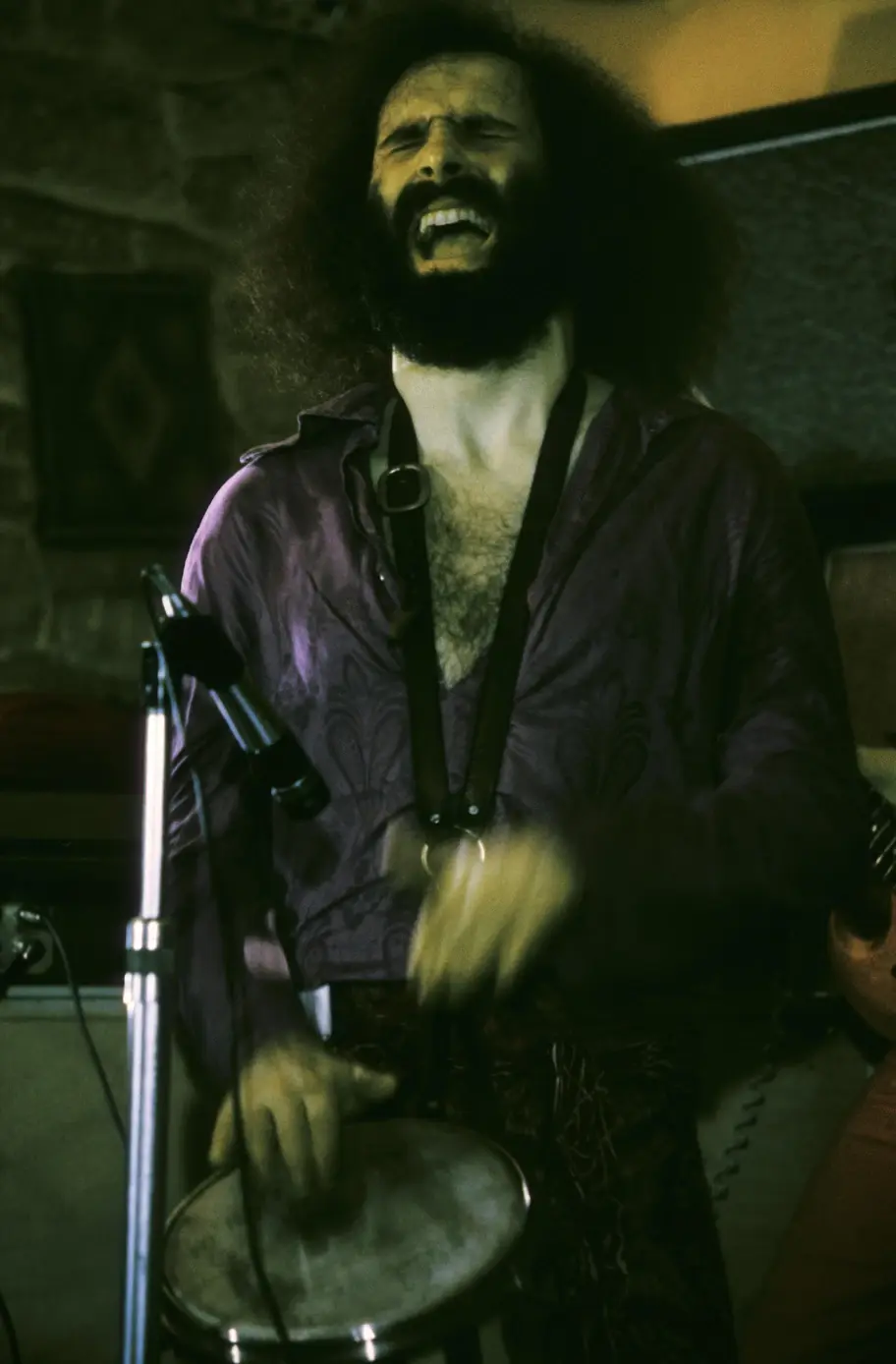
He was friends with people in Manfred Mann, and through them Cream drummer Ginger Baker who introduced him to Jack Bruce. Watch this interview from 0:41 onward to hear Brown describe it in his own words.
At first, Cream’s management didn’t think a poet should be writing lyrics for a rock band. But once Bruce and Brown sat down together, something just clicked. Their first major collaboration was I Feel Free in 1966. And that kicked off one of the most iconic song writing partnerships of the era.
From there, Pete went from being the guy shouting verse in underground clubs to co-writing Sunshine of Your Love, White Room, and SWLABR - some of the defining songs of the psychedelic age.
Right, that brings us back to White Room. It really is about a white room, but it started out with the guitar parts - and actually with different lyrics too.
Guitarist Jack Bruce was a huge Hendrix fan, and has no issue admitting he was playing around with a Hendrix-esque thing when he came up with the bones of White Room. He told American Songwriter in 2023:
“The inspiration for the music came from meeting Jimi Hendrix and his approach to playing. In fact, he came to the recording session of that in New York and said to me, ‘I wish I could write something like that.’ I said, ‘But it comes from you!’ It’s a synthesis of things and not a completely original chord sequence. It’s the way we placed certain things in time that makes it original.”

You’ll probably agree this song has a unique, almost off beat feel, in a catchy way. Jack has proudly claimed that’s because he snuck in time signature changes to highlight certain parts. He says he had to convince the label to accept it.
Drummer Ginger Baker has since slated this after their fallout, saying that he came up with the parts. I guess we’ll never know. But I do know it sounds good.
Once they’d figured out the guitars, Brown got to work on the lyrics. His first draft was a pretty dreary thing called Cinderella's Last Goodnight, about ‘some doomed hippy girl’ as he put it. He’s also said it was about a relationship he was in at the time.
Bruce wasn’t much impressed with this so they went back to the drawing board. I always think that’s the sign of a great songwriter, to be able to redo something to make sure it does the song justice.
Brown went to his stacks of notebooks and found a sprawling eight page poem he’d written during a pivotal point in his life. It was actually shortly after he’d been asked to join Cream, which was his first time having regular work. Brown told Far Out in 2023:
“There was this kind of transitional period where I lived in this actual white room and was trying to come to terms with various things that were going on. It’s a place where I stopped. I gave up all drugs and alcohol at that time in 1967 as a result of being in the white room, so it was a kind of watershed period. That song’s like a kind of weird little movie: it changes perspectives all the time.”
Obviously, you can’t have an eight page poem as lyrics, unless you’re say early Genesis or Yes. So he shaved it down to a page, and really distilled the torment of a man trying to reinvent himself. That instantly recognisable first line straight away sets up a feeling of juxtaposition and turmoil.
In a white room, with black curtains, in the station
Black and white, yin and yang and all that. And the station? Well a station takes you somewhere doesn’t it. And then the next bit just builds up a grim environment.
Black roof country, no gold pavements, tired starlings
He could have just said ‘this place is grey and dreary’ but no. He paints a picture. And then I absolutely love this phrasing.
Silver horses ran down moonbeams in your dark eyes
Pretty sure that’s a beautiful metaphor for tears running down your cheeks. Because the next bit is definitely someone leaving, and it being for the best.
Dawn light smiles on you leaving, my contentment
And this is just the intro - he’s told half a story in just four lines. And he just keeps going. Every verse is telling a story with metaphors and imagery.
You said no strings could secure you at the station
Platform ticket, restless diesels, goodbye windows
And then the chorus. so simple, with the first lines linking back to the previous verse.
I'll wait in this place, where the sun never shines
I'll wait in the queue when the trains come back
I'll sleep in this place with the lonely crowd
Followed each time by this beautifully poetic line:
Lie in the dark, where the shadows run from themselves
You just know that when he wrote that line, he knew it was a good one.
Honestly, sit and listen to this song with the lyrics and your thinking cap on. It plays like a movie.
As you’ve probably guessed, the main story paints a picture of a couple parting ways at the station. Sad.

But the subtext is of an old life being left behind, the excitement of open opportunity that brings, and the joy of finding something new afterwards. Go on. Read the lyrics.
And this is exactly what Brown was talking about - I think the song is really a blend of his first draft - the doomed hippy - and his revised version, about his watershed change.
Or, an alternative take that makes a lot of sense: It’s not about a woman at all - it’s about leaving behind substance abuse. Have a look and listen back through with that idea in mind, and you can definitely see it.
Is that last verse actually describing a relapse? Or happiness to have kicked the habit?
At the party, she was kindness in the hard crowd
Consolation for the old wound now forgotten
Yellow tigers crouched in jungles in her dark eyes
Now gets morning, goodbye windows, tired starlings
But this is just my take on it: There’s loads. Some people point to the time it was released - 1968 - and the turmoil of the Vietnam war going on at the time. If you squint a bit, I guess you could apply it to that.
How he made such a deep and visual set of lyrics marry up to that catchy, upbeat riff I'll never know. I guess that’s just what great music is all about. In his words:
“That song’s like a kind of weird little movie: it changes perspectives all the time. That’s why it’s probably lasted – it’s got a kind of mystery to it.”
If you would rather watch these stories than read them, check out my YouTube channel!


Comments