.png)

.png)
What happened to Transvision Vamp?
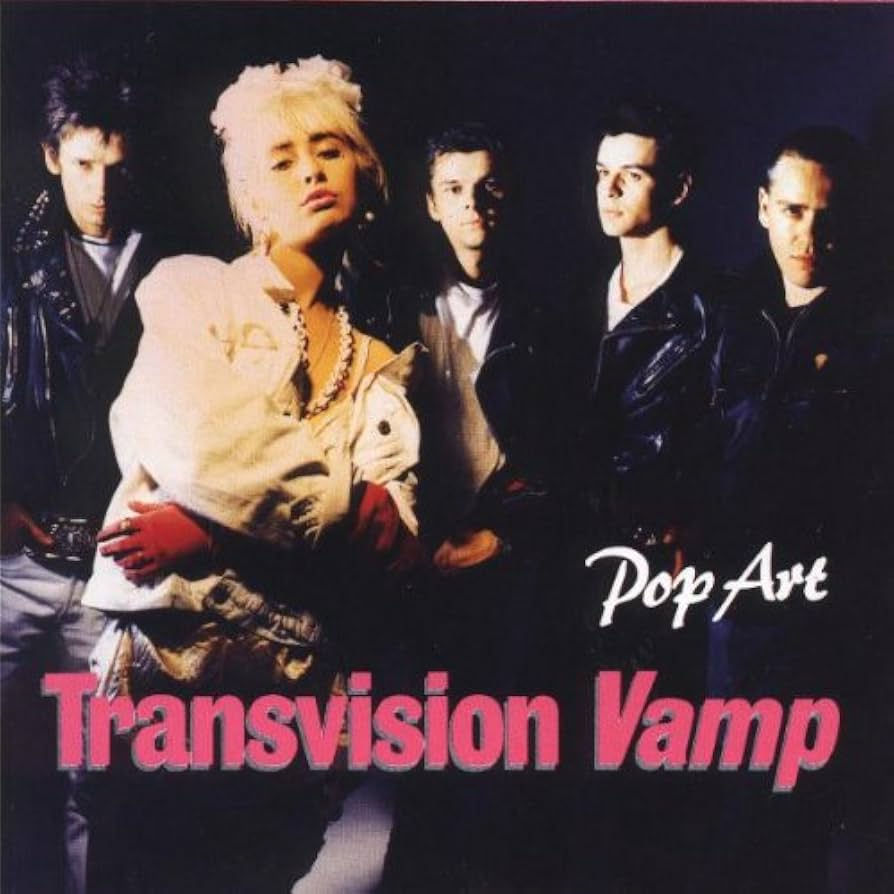
In the mid 80’s, an unknown bunch of teenagers walked into EMI records and told them ‘‘We’re going to be the biggest band in the world, give us a deal,' and walked out with a record deal. And for a while, they looked like they were going to.
It just didn’t really work out after that.
Let's talk about the name first: Transvision Vamp. What the hell does that mean?
Well apparently they don’t know either. They said in one interview it was a name meant to excite people, but that’s about all the explanation I can find.
Important thing is, you hear the name Transvision Vamp and you are immediately intrigued, right?
But nowadays, you might hear the name and ask what ever happened to them? Why didn’t they make it big? Today we’re going to look at why that is.
Transvision Vamp formed around the absolute bombshell that is Wendy James.
Wendy was born in London and was adopted as a baby
She was raised near Brighton, and fell in love with the punk scene at an early age. She bought Never Mind the Bollocks around ten years old - I'm not sure who sold that to a ten year old - and was at the front row of the Clash shows at 14. She might have a posh accent, but she's a punk at heart.
Wendy left home at 16 to find her own way in the world. This ended up being Brighton, but that was a pretty good place for a wild young punk to be.
In 1986 she met Nick Sayer, a talented guitarist and songwriter, and they immediately formed a band. Nick had played in punk bands for some years and seen some success, and he wrote most of Transvision Vamp's songs, with Wendy writing lyrics too.
They took their punk roots and glued it to catchy pop and Wendy’s image, and came up with something very cool. It wasn’t really punk at all. It was pop rock. Maybe slightly pop punk.
It wasn’t just her image though, they wrote good songs and had an absolutely fearless attitude. Wendy believed in herself 100%, and had the guts to chase after what she wanted. She certainly wasn’t the type to sit back and wait for something to happen. She told the Guardian in 2025:
“I thought I was going to be bigger than Madonna. And I was pretty sure I was going to win an Oscar.”
They recruited a bass player in Dave Parsons, a drummer in Pol Burton and keyboardist Tex Axile rounded out the lineup on keys. Fun fact, Dave Parsons would later go on to play bass in Bush, the British rock band who had the No.1 hit Swallowed in 1996.
With a lineup in place they needed a label, and that’s when the famous ‘give us a record deal’ moment happened. Wendy was so sure that they were going to be huge that she just walked straight into EMI and demanded to see Dave Ambrose, the guy who had signed the Sex Pistols.
Amazingly, it worked. They were shown to his office, played him a tape of material they’d demo’d and he gave them studio time to finish the songs properly.
Soon they were hearing the songs for the first time on the radio. Wendy was the real deal - an amazing voice, and she was a natural frontwoman with great charisma. Combined with Nick's song writing skills, they had a lot of potential.
It’s interesting to me that they didn’t go in for a full on female fronted punk band, but I guess they knew that that wasn’t going to sell as well as the pop rock they came up with.
It’s not like they were full on pop softies though. Their music had an attitude and personality, and Wendy had this amazing image. She looked somewhere between a punk and beauty model. And with the boys in their leather jackets and docs, they definitely looked cool. They were interesting and different and just kind of made you take a second look.
It wasn’t instant success though. Their first single barely cracked the top 100. Their second did a little better at 45, but it was their third single I Want Your Love that changed things for them.
It went massive across Europe, especially Norway, weirdly. But it was top 10 in most of the rest of the EU and Australia and NZ too.
I think this song is a really good showcase of how they managed to blend pop and punk.
They had officially arrived, and they didn’t waste much time releasing their first album, the aptly named Pop Art, in 88, which rode the success and did really well in the UK and Australia, hitting No.4 at home.
And they just kept rolling. The song Baby, I don't care was their biggest hit ever, and it’s easy to see why. It’s got attitude and it’s just a great time.
The second album Velveteen in 1989 was almost as successful as their first one, and if anything reached a wider audience. It did really well all the way in NZ, hitting No. 12 on the charts. They’d even started to gain ground in America, which was the holy grail for a young band.
So it sounds like everything is going great... but there were problems.
One, their label didn’t like the direction the music was going. Wendy thinks that was because things like grunge and hip hop were coming in, especially in the US, which is the big market.
Transvision Vamp’s spiky pop rock was at the same time upbeat and trod on people's toes.
And the other problem was, a lot of people didn’t like Wendy. Or more accurately, old blokes didn’t like her. She was constantly sexualised and mocked, especially by critics in interviews.
Wendy was in the habit of wearing skimpy outfits, looking great, and basically sticking her tongue out at the world and saying 'I don’t care what you think'.
Some of these old blokes don’t like pretty young girls who make a lot of noise and don’t care about them. So they tried to make her look stupid. Time Out magazine actually put her in its 100 Most Hated list in 1990. Not sure why they even had one of those.
And look at the way this bloke talks to her in a 1991 interview. He spends the whole thing taking subtle shots at her and generally dismissing her.
This was the theme of all her TV interviews at the time. They’d generally demean or disregard her and make it out like the only reason the band had any success was because she was attractive.
And that seemed to be the theme throughout her career - the media interested much more in her looks rather than her music.
Now, when the first singles for the third album didn’t chart well, their record label started to hesitate. Eventually, when they completed the album in 1991, the record label refused to release it in the UK. They did release it in NZ and Australia and a couple others, where it did well. It was 14 in NZ.
Not surprisingly, there was arguing, and the band decided to split. The album never was released in the UK.
So it was an abrupt and unexpected end for a spunky little band that seemed like they were going a long way.
Wendy wasn’t going to slow down, she moved to the states to start a solo career, where she worked with Elvis Costello after she wrote to him and asked him to write her a song - she was a huge fan of his. He ended up writing her an entire album in a single weekend.
But sadly, it ended up being a similar experience to most of her interviews.
The lead single was about a little puppet girl, who is being fed what to say. She told the Guardian in 2025 that it was:
“A male cliche of what idiots young female pop stars are. It was quite nasty – he was asking me to sing derogatory stuff about myself, or this concept of myself.”
When asked about it, Costello said it was satire. He also said the production on the album ‘all the punch of a sock full of cold rice pudding’, but that he vocals was the sole highlight. He basically said the whole thing was a joke on the industry that she didn’t get.
I’ll let you be the judge of that. But it was here that she decided she needed to write her own songs - which is probably what he was getting at.
In Transvision Vamp, Nick wrote the songs, she sang them. That seems to have rubbed people the wrong way. Luckily she had a pretty useful boyfriend at the time. The Clash’s guitarist Mick Jones. She told Classic Pop in 2025:
“He went down to Denmark Street and got me a Portastudio, a microphone and a Copicat Echo machine. I already had a guitar. And he said to me, God love him, ‘Find your own voice’. So that’s what I did.”
Wendy went on to have a successful-ish solo career, and in 2025 she reformed Transvision Vamp but with a brand new line-up - not including co-founder Nick Sayer. And they toured the UK in 2026 for the first time since 1991.
And Wendy’s proud of her life, and her career. She refuses to apologise for the fact that people thought she was too much, and says she’s inspired women after her to make their own way. She told the Guardian:
“I think Miley Cyrus has had a look [at me]. There’s a continuous path of kind of spunky, independently minded, fearless young females that are warriors.”
I think she might be right.
If you would rather watch these stories than read them, check out my YouTube channel!



Comments